2026-10-23 ·
How To Remove Spray Foam From Lofts In York Properties
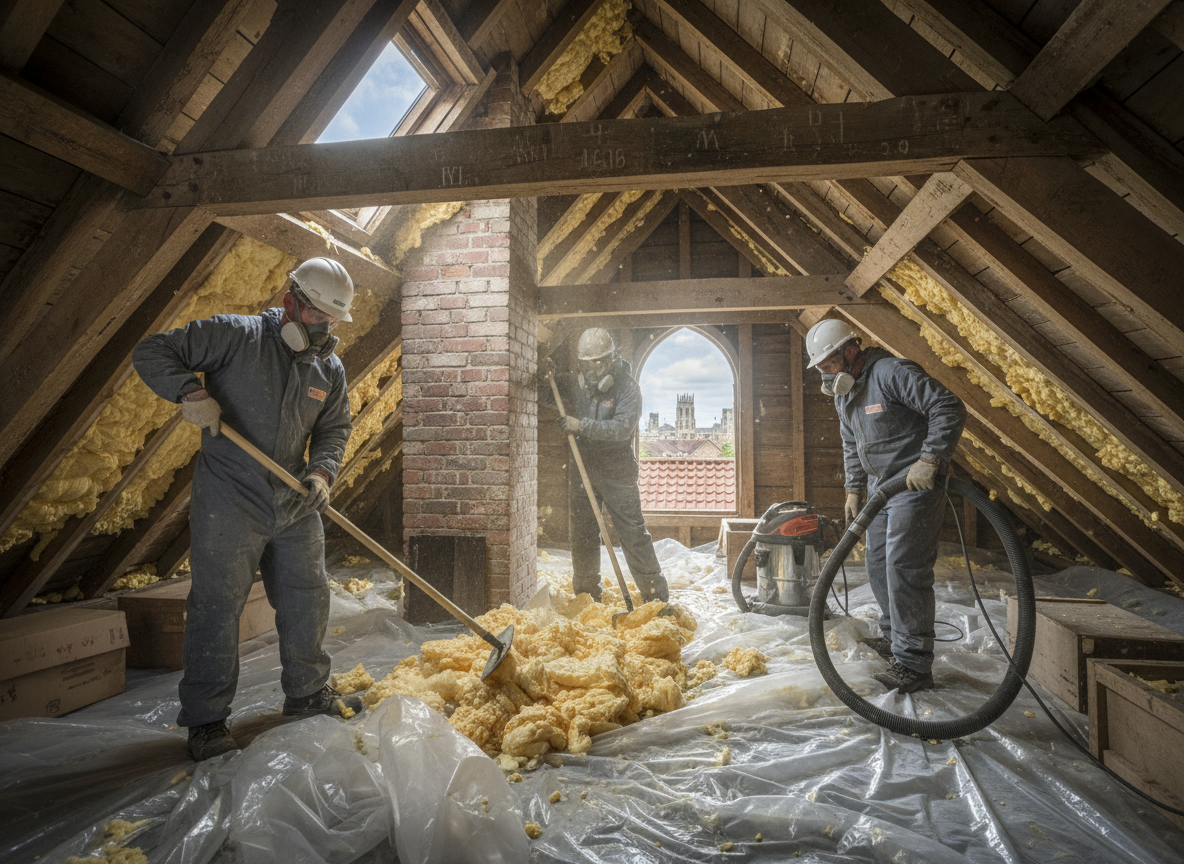
Removing spray foam from lofts in York properties starts with a full inspection of the roof space to identify foam type, depth and any damage to timbers or membranes. In York and surrounds such as Strensall and Bishopthorpe, many homes built before 1950 feature pitched roofs with limited headroom, making access and extraction slower than in modern builds. Expect the process to take 3 to 7 days depending on loft size and whether open-cell or closed-cell foam was used. Professional teams begin by sealing the space, then use mechanical or thermal methods to strip the material without harming rafters or insulation boards beneath.
Initial Loft Assessment in York Homes
A thorough assessment identifies whether the foam was applied directly to the underside of the roof tiles or between rafters, a common installation in North Yorkshire properties seeking extra insulation against cold winters. Walk the loft floor and check for signs of trapped moisture, sagging felt or timber rot that often appears after 5 to 10 years in York’s damp climate. Measure the foam thickness at multiple points and note any wiring or pipework embedded in the material. Homeowners in areas like Heslington or Poppleton should also inspect for asbestos in older ceilings before any disturbance begins. This step prevents surprises during removal and helps decide between dry ice blasting or mechanical scraping.
Safe Removal Techniques for Local Housing Stock
York’s Victorian terraces and stone cottages require methods that avoid damaging original lath and plaster ceilings below. loft spray foam removal teams typically start at the ridge and work downward, using negative air machines to capture dust. Closed-cell foam often needs scoring with a hot knife followed by prying, while open-cell material can be pulled in larger sections. In colder months, crews working in Bishopthorpe or Copmanthorpe may pre-warm the space to keep materials pliable. Always wear full PPE including respirators rated for isocyanates, and bag waste immediately to prevent fibres spreading through the house.
Managing Moisture and Ventilation After Extraction
Once the foam is gone, York properties frequently need improved airflow to prevent condensation on cold roof surfaces during the region’s wet winters. Install new ridge vents or soffit grilles sized for the roof pitch, and check that felt or membrane remains intact. Dealing With Condensation After Spray Foam In York Homes explains how to add insulation at ceiling level instead. Test for damp with a moisture meter on rafters and walls before re-boarding the loft floor. Properties near the river in central York may also require extra checks for rising damp that can travel upward once the foam barrier is removed.
Timing Work Around North Yorkshire Weather
Schedule removal during drier periods between April and October when loft temperatures stay above 10°C, allowing adhesives and sealants to cure properly. When To Consider Spray Foam Removal Before Winter In North Yorkshire outlines why waiting until the first frost can complicate jobs in exposed villages like Dunnington or Wheldrake. Avoid starting projects in December through February unless urgent, as scaffolding and waste removal become difficult on icy streets around 48 Coney Street. Planning ahead also lets you coordinate with any roof repairs needed once the foam is cleared.
When to Call Specialists for Historic or Complex Lofts
Older buildings in York’s conservation areas often need listed-building consent before major loft work begins. Removing Spray Foam From Historic York Buildings covers extra care required around original timber trusses. If the loft contains fragile wiring from the 1960s or 1970s, or if foam has bonded to slate tiles, specialist residential spray foam removal crews with thermal or sand-blasting equipment are recommended. Always obtain written method statements and waste transfer notes before work starts to stay compliant with local regulations.