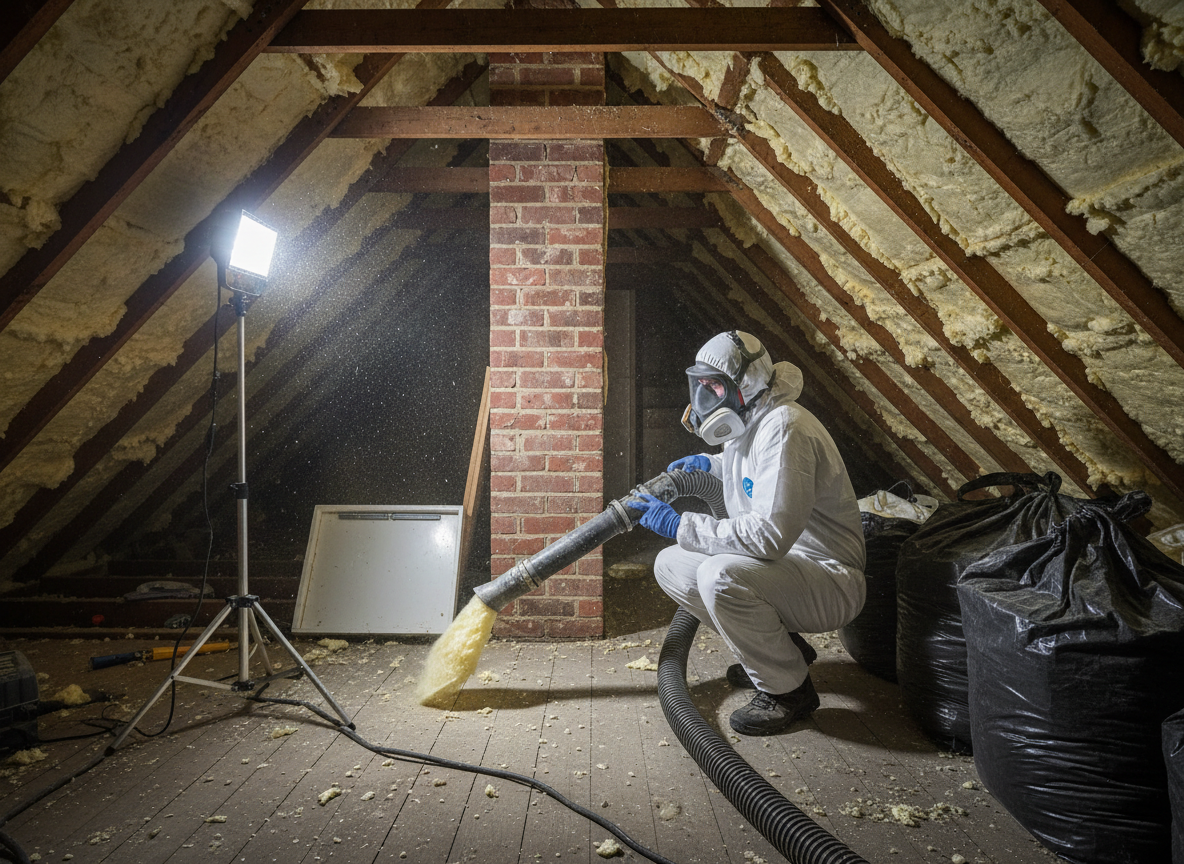
York's Victorian and Edwardian terraces in areas such as Bootham, Clifton and Heworth often have spray foam applied directly over original lath and plaster or between narrow rafters. Over time the foam absorbs moisture from the region's frequent rainfall and poor loft ventilation, leading to hidden rot in timber and reduced insulation performance. Removal requires cutting the foam in sections without disturbing fragile ceilings below while containing dust that can filter through gaps into living spaces.
Winter temperatures in the York area frequently drop low enough to make foam brittle, which helps during mechanical removal but also increases the risk of small fragments falling into wall cavities. In summer the same attics become warm and humid, softening the foam and making it stickier to extract cleanly. Crews must work around chimney stacks, water tanks and electrical wiring that are common in these older properties, often using negative air machines to keep particles out of the rest of the house.
After the bulk foam is taken out, residual adhesive on rafters and joists needs to be scraped and the space vacuumed thoroughly. Any signs of condensation staining or timber decay found during the job are noted for the homeowner, as these are frequent in North Yorkshire roofs that have had foam installed for more than a decade. Waste is bagged on site and removed for proper disposal rather than left in skips that could attract complaints in tight city-centre streets.
Technician insight
In York, the thing that catches most people out with Attic spray foam removal is how many 1890s terraces around the city walls still have the original narrow roof voids with foam sprayed right up to the ridge; once winter rain gets in, the foam traps it against the timber and the whole job takes longer because you have to stop and treat any soft spots before finishing.
Clifton Terrace Attic
Homeowner in a Clifton Victorian terrace noticed musty smells after heavy autumn rain. Inspection found spray foam holding moisture against ceiling joists. Foam was cut out section by section, residue scraped, and space vacuumed; minor rot treatment was flagged for a separate carpenter visit.
How it works
- 1
Site Assessment
Inspect the attic space, note access points, wiring and any existing moisture damage in York properties.
- 2
Containment Setup
Seal off the loft hatch and install dust extraction to protect rooms below during removal.
- 3
Foam Extraction
Cut and remove foam in manageable sections, working around rafters, chimneys and tanks typical of local housing.
- 4
Final Clean And Check
Scrape residue, vacuum thoroughly and inspect for any timber issues before leaving the site.
Pricing
Cost depends on attic size, foam thickness and access difficulty; an upfront quote is provided after inspection.