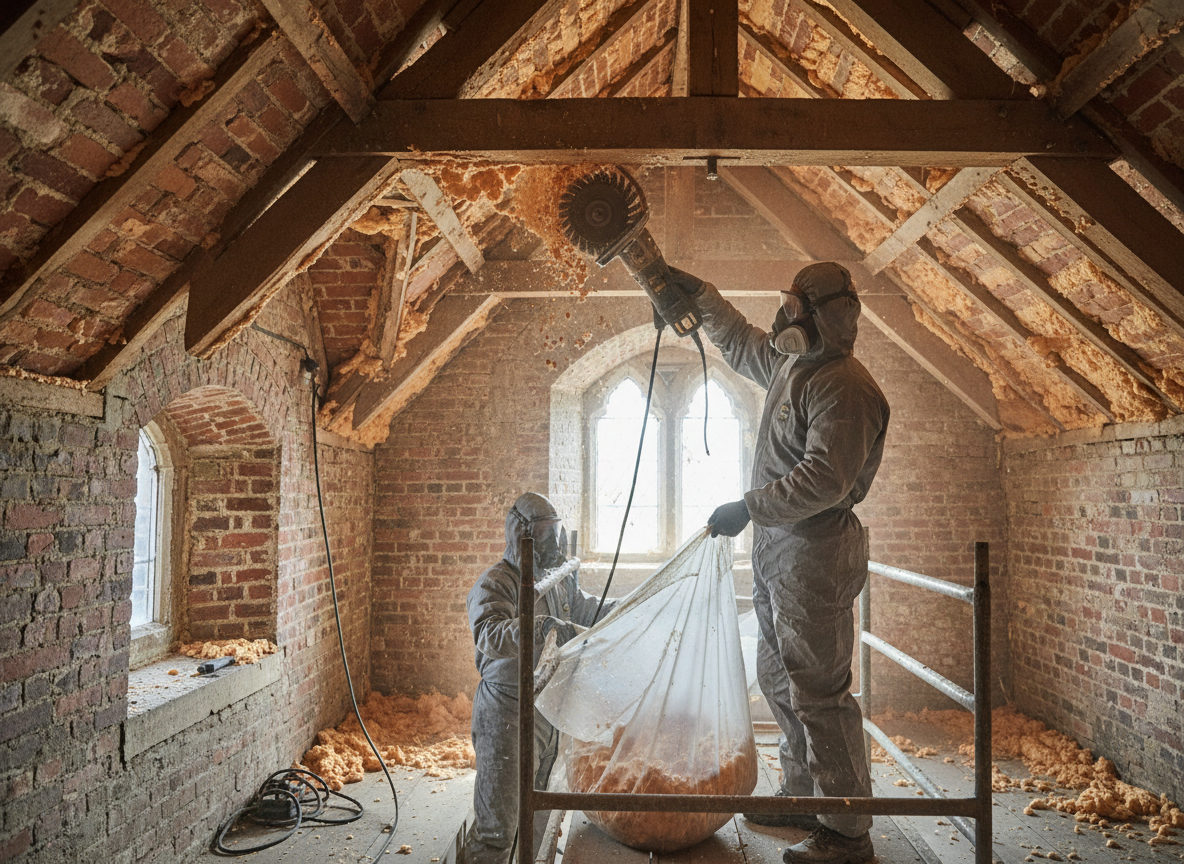
Closed cell spray foam bonds tightly to joists, rafters and masonry in York’s older terraced and stone-built homes. Removal requires careful cutting, mechanical scraping and solvent softening to avoid damaging lath and plaster ceilings or original timber. In North Yorkshire properties, moisture trapped behind the foam often leads to rot in floor joists, so inspection with moisture meters comes first. Dust containment is essential because historic York buildings have limited ventilation paths and shared walls with neighbours.
Edge cases appear regularly around chimney breasts and party walls where foam was applied over original lime mortar. The rigid closed cell material can pull masonry apart during extraction, requiring hand tools rather than power chisels. Building regulations in the York area now flag spray foam as a potential ventilation barrier, so any removal job includes checking for updated roof vents and ensuring airflow meets current standards. Homeowners in Clifton and Acomb often discover foam has bridged damp-proof courses, creating new water ingress routes once it is gone.
Solvent choice matters on site because some products damage bitumen felt underlays common in North Yorkshire roofs. Technicians test small sections first and work in sections to keep debris from falling into living spaces below. After extraction, surfaces are cleaned and left ready for new insulation or re-plastering. The process takes longer in winter when colder temperatures slow solvent action and make the foam more brittle.
Technician insight
In York, the thing that catches most people out with closed cell spray foam removal is how often it has bridged the original damp proof course in Victorian terraces around the city centre. Once the foam is gone you suddenly see rising damp that was masked for years, especially on north-facing walls where North Yorkshire winters keep the ground wet.
Heworth Terrace Extraction
Homeowner in a 1900s York terrace noticed musty smells in the loft. Inspection showed closed cell foam had trapped moisture against the stone gable. We removed the foam in sections, treated the affected joist ends and fitted new vents. The property now has dry timbers and improved airflow.
How it works
- 1
Site Assessment
Inspect foam depth, substrate condition and any moisture issues in the York property before starting extraction.
- 2
Containment Setup
Seal rooms and install dust extraction to protect historic interiors and neighbouring homes.
- 3
Mechanical Removal
Cut, scrape and soften closed cell foam using approved solvents and hand tools to prevent substrate damage.
- 4
Final Clean and Check
Remove residue, test for remaining damp and leave surfaces ready for follow-on trades.
Pricing
Cost depends on access, foam thickness and property age; upfront quotes provided after inspection.