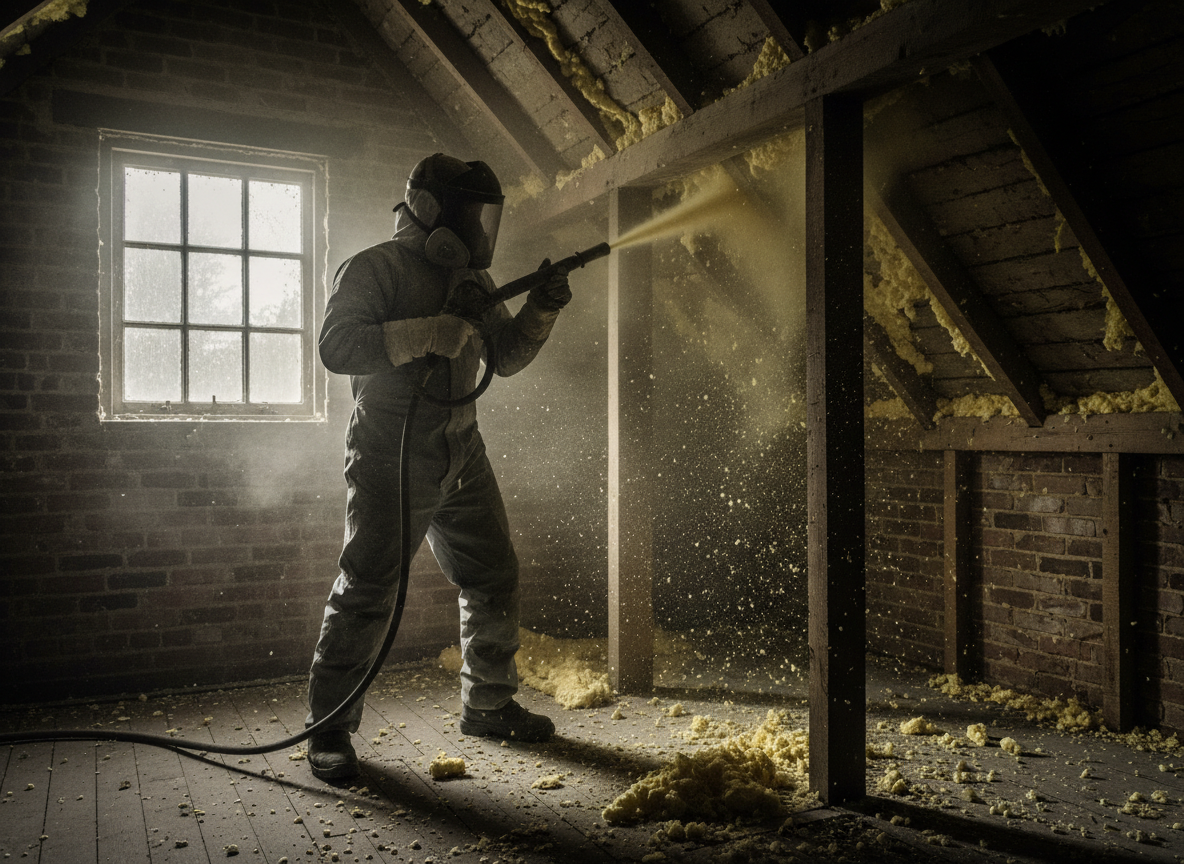
York's housing stock includes many Victorian and Georgian terraces with solid brick or stone walls that were never designed for modern closed-cell foam. When spray foam was applied directly to these surfaces, it often trapped rising damp from the clay-heavy soils common around the Ouse and Foss rivers. Sand blasting removal must be calibrated to strip the foam while preserving the original pointing and avoiding micro-fractures in the masonry that could worsen water ingress during the region's frequent winter rainfall.
Edge cases appear regularly in properties around Clifton and Acomb where previous loft conversions or extensions have left foam in awkward junctions against timber joists. The blasting media must be selected to clear residue without embedding grit into the wood, which can later promote rot. Local building control expectations also require that any removal leaves the structure able to breathe again, especially in conservation areas where breathable lime finishes are mandated.
Weather patterns in North Yorkshire add another layer: prolonged wet spells followed by cold snaps mean the substrate is often damp when work begins. Blasting on saturated walls risks driving moisture deeper into the fabric, so we stage the job with temporary drying measures and check moisture readings at each stage. Homeowners frequently underestimate how much dust containment is needed in terraced rows where party walls allow migration into neighbouring properties.
Technician insight
In York, the thing that catches most people out with sand blasting spray foam insulation removal is the solid brick walls in older terraces around the city walls and near the rivers; once foam is stripped, hidden damp from the clay subsoil often shows up and needs addressing before any new insulation goes back in.
Clifton Terrace Damp Issue
Problem: Persistent damp in a 1920s York terrace after spray foam was added years earlier. What we found: Foam bridging the original damp-proof course on rear walls facing the prevailing wind. What we did: Used low-pressure sand blasting to clear the foam while protecting lime mortar joints. Outcome: Walls dried out over the following weeks and the homeowner avoided further internal damage.
How it works
- 1
Initial Assessment
Inspect the property in York to map foam coverage, check substrate condition and note access constraints typical of older terraces.
- 2
Site Preparation
Protect floors, electrics and adjacent rooms, then set up dust extraction suited to the confined spaces found in city-centre buildings.
- 3
Controlled Sand Blasting
Remove foam in layers using adjusted pressure and media to avoid damaging brick, stone or timber elements common in the area.
- 4
Cleanup and Verification
Vacuum residue, test for remaining material and confirm the surface can dry properly given local humidity levels.
Pricing
Pricing varies with property age, foam depth and access difficulty in York terraces and surrounding villages.