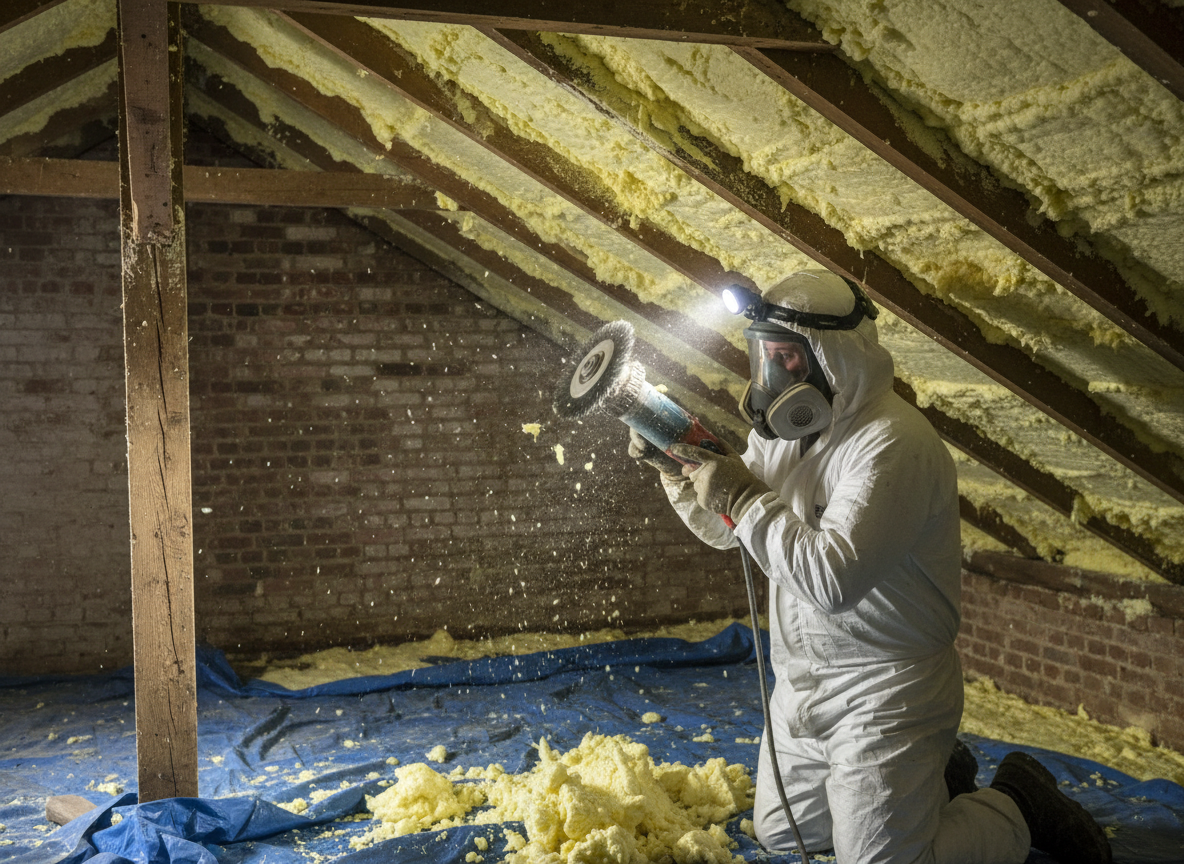
York's older housing stock, particularly Victorian terraces and Georgian properties common throughout the city centre and suburbs like Clifton and Fulford, often received spray foam insulation in lofts or on solid walls during later upgrades. Removing thermal spray foam from these structures requires care because the foam can bond tightly to lath and plaster or brickwork, and improper extraction risks damaging original ceilings or allowing hidden damp to surface. Closed-cell foam in particular creates a vapour barrier that must be fully stripped to restore breathability in these solid-wall homes.
The process starts with identifying foam type and thickness, which varies widely in York properties depending on when it was installed. Open-cell foam crumbles more readily during removal, while closed-cell demands mechanical scraping and vacuum extraction to avoid leaving residue that could affect new insulation. Local weather patterns, with frequent rain and high humidity, mean crews must protect interiors from moisture ingress during the work, especially on exposed roof spaces where tiles may already be aged.
Homeowners in the York area should note that listed buildings or those in conservation zones face additional constraints on removal methods to preserve historic fabric. Edge cases include foam applied over electrical cables or pipework, where rushed removal can create safety issues. Full containment and HEPA filtration are essential because older installations sometimes contain contaminants that become airborne during stripping.
Moisture and Ventilation Considerations
After foam removal in York homes, restoring proper airflow is critical. Solid brick walls common here absorb moisture from the surrounding terrain and river valleys, so crews check for trapped damp and advise on breathable alternatives to prevent future problems.
Technician insight
In York, the thing that catches most people out with thermal spray foam removal is the solid brick construction common in Victorian terraces around the city centre and nearby villages. Foam applied directly to these walls can trap moisture from the damp North Yorkshire climate, leading to hidden rot that only shows up during removal.
Loft Foam Removal in Central York Terrace
A homeowner in a York Victorian terrace reported musty smells after earlier loft insulation. Inspection revealed closed-cell foam blocking original ventilation gaps. We extracted the foam carefully without damaging lath and plaster, cleared debris, and restored airflow to resolve the damp issue.
How it works
- 1
Site Assessment
Inspect foam location, type, and condition while checking for hidden services and structural risks in the specific York property.
- 2
Containment Setup
Seal work areas to control dust and debris, protecting adjacent rooms common in compact terrace layouts.
- 3
Foam Extraction
Mechanically remove the thermal spray foam layer by layer using appropriate tools for open or closed cell material.
- 4
Cleanup and Disposal
Vacuum residue, dispose of waste responsibly, and leave the space ready for inspection or new treatment.
Pricing
Pricing varies by property age, foam thickness, access difficulty, and disposal needs. We provide clear upfront quotes for every job in the York area.