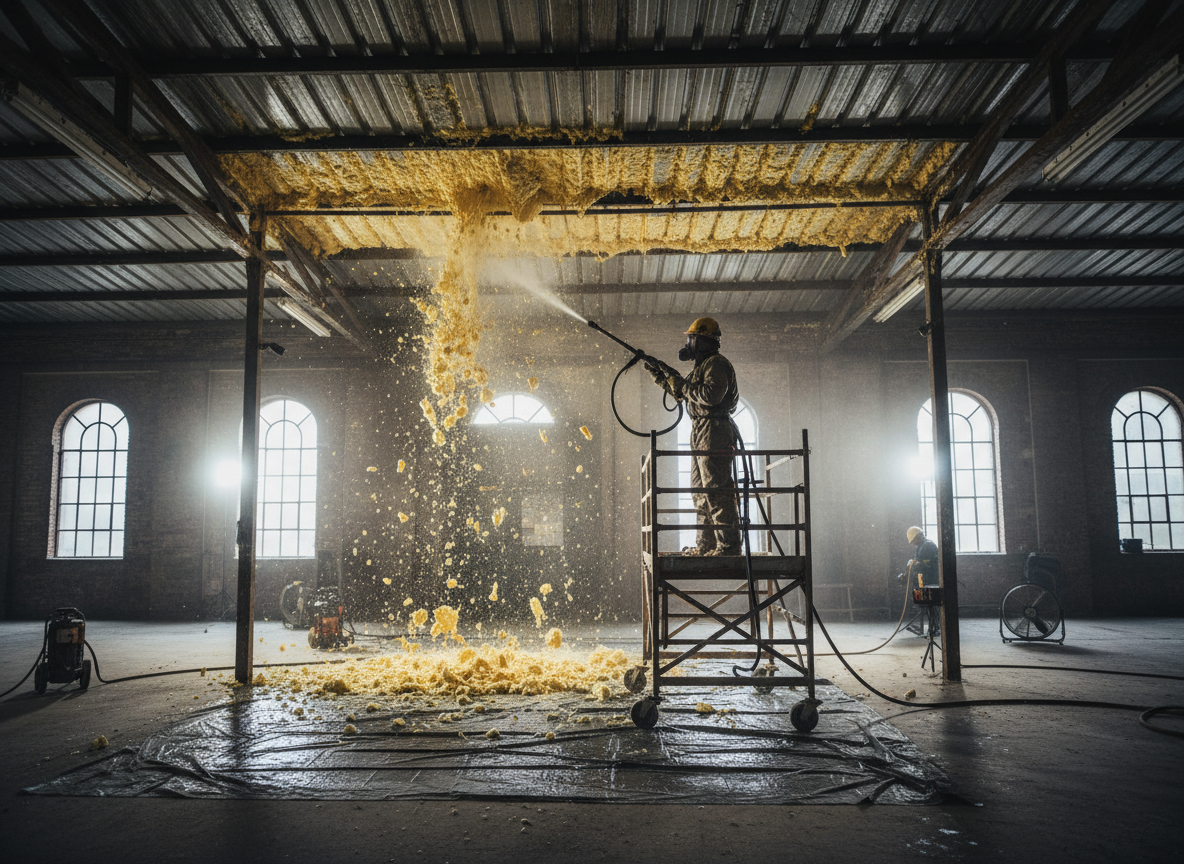
Warehouse spray foam removal in York often involves older brick and steel structures near the River Ouse where moisture can trap foam against metal cladding. Technicians must first isolate electrical and ventilation systems before cutting sections with oscillating tools to avoid damaging purlins or roof lights. In winter, when temperatures drop below freezing, foam becomes brittle and breaks into smaller pieces that are easier to bag but harder to contain on windy days around the city centre.
Edge cases include foam applied over asbestos-containing insulation boards common in pre-1980s warehouses on the outskirts toward Acomb and Clifton. Removal crews wear full respiratory protection and use negative air machines to prevent fibres migrating into adjacent storage bays. York’s planning rules for listed buildings can require written notification before any roof work begins, even for non-structural foam extraction.
Access limitations appear frequently in narrow yards off Coney Street and Goodramgate where cherry pickers cannot fit. Crews rely on scaffold towers and manual removal methods that extend job times. Post-removal inspection checks for residual adhesive that can hold moisture against steel, leading to corrosion if left untreated before new insulation is installed.
Technician insight
In York, the thing that catches most people out with warehouse spray foam removal is the hidden damp trapped behind foam on north-facing brick walls near the river. Older industrial stock around the city centre often has no vapour barrier, so once the foam is gone you find rust on the steel frame that needs treating before any new lining goes up.
Clifton Moor Warehouse Clearance
Foam had been sprayed over the entire ceiling of a storage unit off the A1237, trapping condensation against the metal deck. We found water pooling along the purlins and sections of foam already detaching. After setting up full containment we removed the material in sections over two days and treated the exposed steel before handing the site back clean and dry.
How it works
- 1
Site Assessment
Technicians visit the warehouse to measure foam thickness, check for hidden services, and note access points around York industrial estates.
- 2
Containment Setup
Negative pressure enclosures and dust extraction are installed to protect stored goods and prevent debris escaping into neighbouring units.
- 3
Foam Extraction
Foam is cut into manageable sections using hand tools and removed in sealed bags for off-site disposal compliant with local waste rules.
- 4
Surface Cleaning and Final Check
Remaining adhesive is scraped from cladding and steelwork, followed by a walkthrough with the client to confirm all material has been cleared.
Pricing
Pricing depends on warehouse size, foam depth, and access constraints; contact Purecore Spray Foam Insulate for an inspection-based quote available 24/7.